
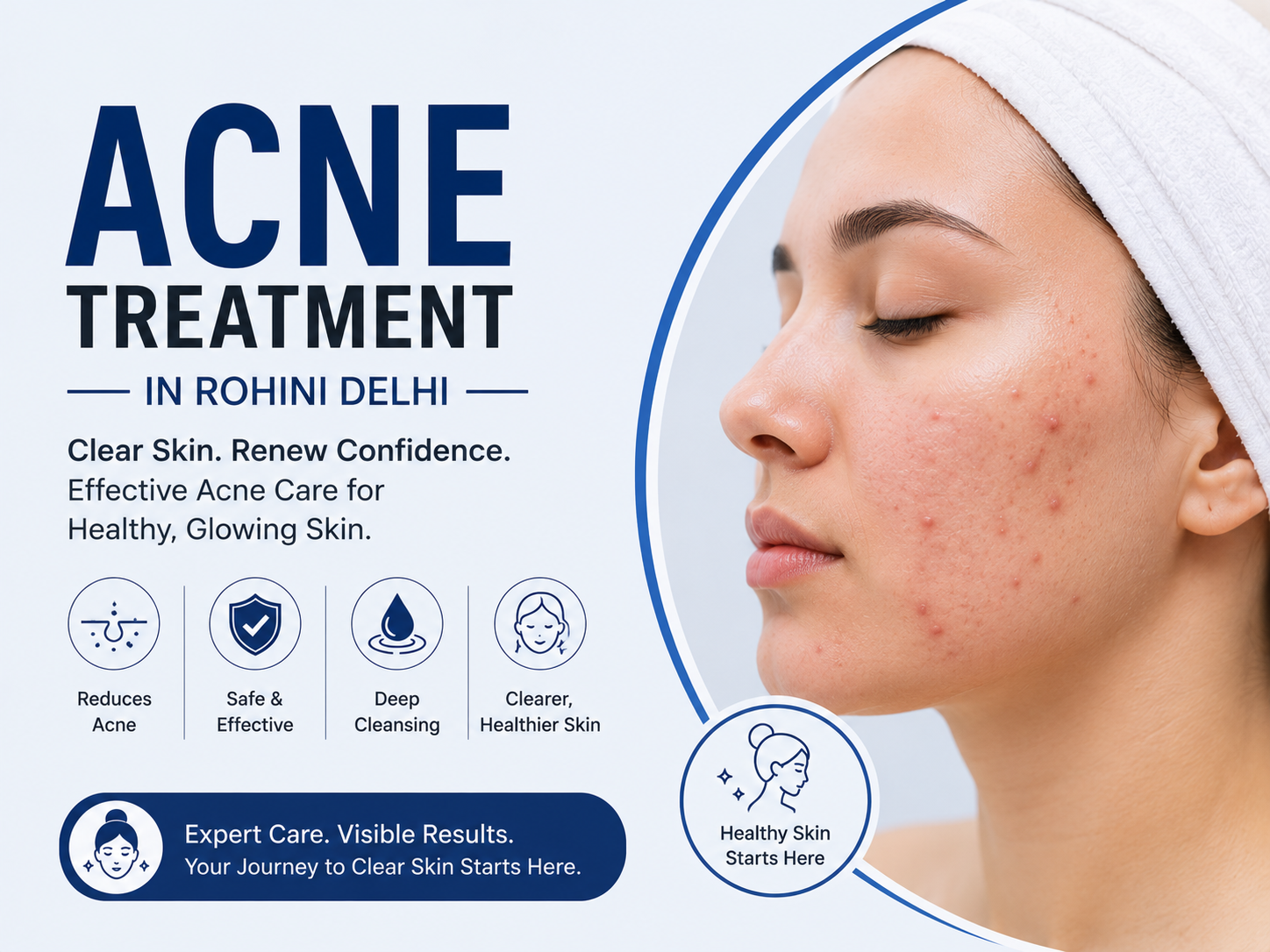
If you have ever cleared up a breakout only to watch new pimples appear days later, you already know how frustrating recurring acne can be. Seeking proper acne treatment in Rohini Delhi is a step in the right direction, but lasting results require understanding why acne keeps returning in the first place. Acne is rarely a simple skin-surface problem — it is rooted in a combination of hormonal activity, bacterial growth, inflammation, and lifestyle factors that must all be addressed together.
This article breaks down the most common causes of persistent acne and walks you through the treatment options that dermatologists actually use to achieve long-term skin clarity.
Why Does Acne Keep Coming Back?
Many people treat the visible symptoms of acne — the redness, the bumps, the scars — without addressing what is driving those symptoms beneath the skin. When the root cause is left untreated, acne returns reliably, sometimes in cycles.
1. Hormonal Fluctuations
Hormones are among the most common triggers for recurring acne, especially in women. Androgens, a group of hormones that includes testosterone, stimulate the sebaceous glands to produce more oil (sebum). When sebum production spikes, pores are more likely to become clogged, creating the perfect environment for acne-causing bacteria to thrive.
Hormonal acne typically flares:
- Around menstrual cycles
- During pregnancy or postpartum recovery
- At perimenopause
- Due to conditions such as polycystic ovary syndrome (PCOS)
- Following changes in hormonal contraceptives
2. Overproduction of Sebum
Even without an obvious hormonal condition, some people simply have naturally overactive sebaceous glands. Excess oil mixes with dead skin cells and debris inside the pore, forming a plug. This plug can remain beneath the skin surface as a whitehead or push outward as a blackhead, and either can escalate into an inflamed pimple if bacteria multiply inside.
3. Propionibacterium acnes (C. acnes) Bacteria
Cutibacterium acnes (formerly called P. acnes) is a bacteria that lives on the skin naturally. In controlled numbers, it causes no harm. However, inside an oxygen-poor, sebum-rich clogged pore, it multiplies rapidly and triggers an inflammatory immune response — which is what causes the redness, swelling, and tenderness associated with acne lesions.
4. Dead Skin Cell Buildup
The skin naturally sheds dead cells, but when this process is sluggish or uneven, dead cells accumulate on the surface and inside pores. This is one reason why exfoliation — done correctly — is a cornerstone of acne management.
5. Diet and Lifestyle Triggers
Research increasingly links certain dietary patterns to acne recurrence:
- High-glycemic foods (white bread, sugary drinks, processed snacks) cause insulin spikes that may stimulate oil production.
- Dairy products have been associated with increased breakout frequency in some individuals, possibly due to hormonal components in milk.
- Stress elevates cortisol levels, which in turn can increase sebum production and delay skin healing.
- Inadequate sleep impairs the body’s ability to regulate inflammation, making existing acne worse and new breakouts more likely.
6. Incorrect or Inconsistent Skincare
Using the wrong products — or using the right products inconsistently — is one of the most overlooked causes of persistent acne. Heavy, pore-clogging moisturizers, harsh cleansers that strip the skin’s moisture barrier, and abrasive scrubs can all worsen acne. Similarly, stopping a treatment regimen too soon (before the skin has had time to fully respond) is a common reason breakouts return.
Acne Treatment in Rohini: Effective Options for Recurring Breakouts
There is no single treatment that works for everyone, but dermatologists have a well-established toolkit for tackling acne at every severity level. The best results come from combining treatments that target multiple causes simultaneously.
Oral Medications
For moderate to severe or hormone-driven acne, oral medications are often necessary:
- Oral Antibiotics (doxycycline, minocycline) reduce bacterial activity and inflammation. They are typically used for a defined short course to prevent antibiotic resistance.
- Hormonal Therapy — oral contraceptives or anti-androgens such as spironolactone are highly effective for women whose acne is hormonally driven.
- Isotretinoin (Accutane) is reserved for severe, cystic, or treatment-resistant acne. It works by dramatically reducing sebum production, shrinking oil glands, and preventing future clogging. It is taken under close medical supervision.
In-Clinic Dermatological Procedures
For those dealing with persistent or scarring acne, in-clinic procedures offer targeted results that topical products alone cannot achieve:
- Chemical Peels — formulas containing glycolic acid, salicylic acid, or TCA are applied to exfoliate deeply, unclog pores, and reduce acne-related pigmentation.
- Laser and Light Therapy — certain wavelengths of light target C. acnes bacteria and reduce sebaceous gland activity. Blue light therapy and pulsed dye lasers are common options.
- Comedone Extraction — performed under sterile conditions by a dermatologist, this removes deeply lodged blackheads and whiteheads without causing trauma to surrounding skin.
- Corticosteroid Injections — for large, painful cystic nodules, an intralesional corticosteroid injection can reduce swelling and accelerate resolution within days.
- Microneedling with RF — effective for treating acne scars left behind after inflammation resolves, stimulating collagen production for smoother texture.
Building a Routine That Prevents Recurrence
Treatment alone is only part of the equation. A thoughtful daily skincare routine significantly lowers the chance of new breakouts forming:
- Cleanse twice daily with a gentle, non-comedogenic cleanser — avoid over-washing, which strips the barrier and prompts more oil production.
- Use non-comedogenic moisturizers — hydration matters even for oily skin, as dehydrated skin compensates by producing more sebum.
- Apply SPF daily — many acne treatments increase sun sensitivity, and UV exposure worsens post-acne marks.
- Avoid touching your face — hands transfer bacteria and irritants directly onto skin.
- Change pillowcases regularly — pillowcases accumulate oil, sweat, and product residue that can clog pores overnight.
- Introduce new products slowly — adding multiple actives at once makes it impossible to identify what is helping or causing irritation.
Frequently Asked Questions
Q: Why does my acne come back every month at the same time?
A: Monthly cyclical acne is almost always hormonally driven, typically linked to the menstrual cycle. A dermatologist can evaluate whether hormonal therapy or targeted topicals would help regulate this pattern.
Q: Can stress alone cause acne to return?
A: Yes. Stress triggers cortisol release, which stimulates oil production and impairs the skin’s immune response, making you more vulnerable to both new breakouts and slower healing of existing ones.
Q: How long does it take for acne treatment to show results?
A: Most topical treatments require at least 8 to 12 weeks of consistent use before results are clearly visible. Oral medications and in-clinic procedures may produce faster improvement, but long-term maintenance is still necessary.
Q: Is it safe to pop or squeeze pimples to speed healing?
A: No. Squeezing pimples pushes bacteria and debris deeper into surrounding tissue, increasing the risk of infection, prolonged inflammation, and permanent scarring. A dermatologist can safely extract lesions using proper technique.
Q: What type of acne is the hardest to treat?
A: Cystic or nodular acne — deep, painful lumps beneath the skin’s surface — is the most difficult to manage with over-the-counter products and usually requires prescription medication, often isotretinoin under medical supervision.
Q: Does diet really affect acne?
A: Evidence suggests that high-glycemic diets and, in some people, dairy products can worsen acne. However, dietary changes work best as a complement to medical treatment, not a replacement for it.
Conclusion
Recurring acne is rarely caused by just one thing. Hormonal fluctuations, bacterial overgrowth, excess sebum, poor skincare choices, and lifestyle factors all interact to keep breakouts cycling back. The good news is that modern dermatology has highly effective tools to address each of these root causes — from prescription retinoids and hormonal therapy to laser treatments and chemical peels.
If you have been managing breakouts on your own without lasting success, working with a qualified dermatologist is the most direct path to clear, stable skin. A professional can assess your specific acne type, identify your personal triggers, and build a treatment plan tailored to your skin — not just the symptoms showing up on the surface.
🌐 Visit our website:
https://oswaljainskinclinic.com/
📖 Explore more expert articles:
https://oswaljainskinclinic.com/