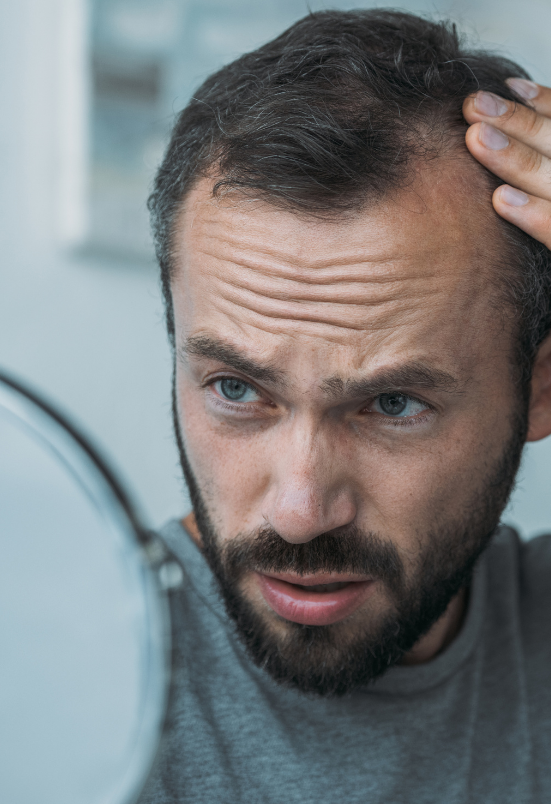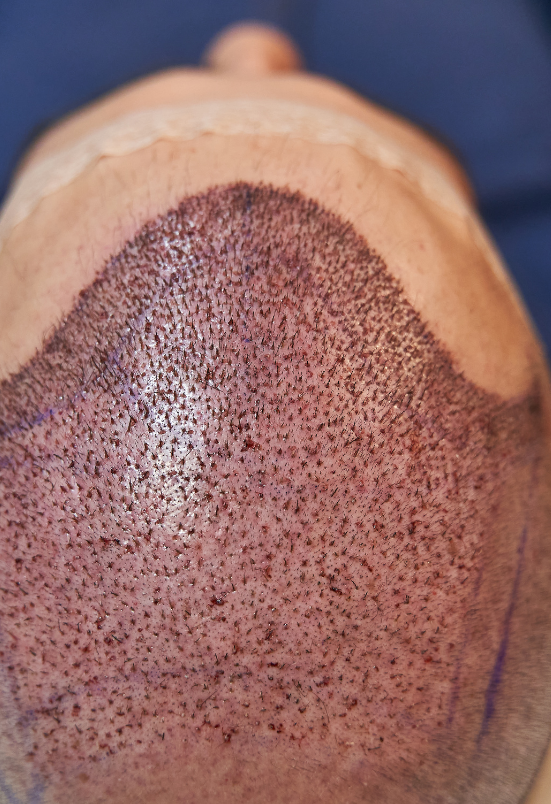

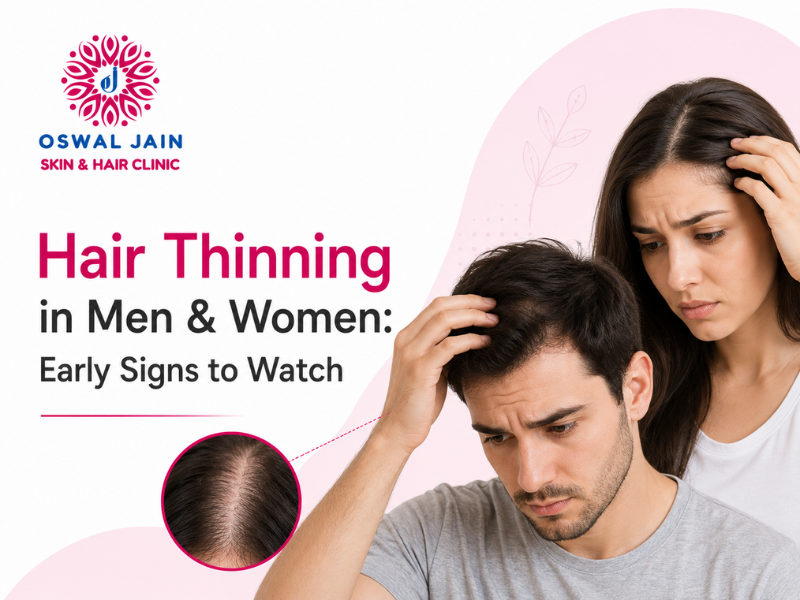
Hair thinning can happen gradually, making it difficult to notice at first. You may simply feel that your hair has lost some volume, your parting looks wider, or more scalp is becoming visible. For some people, these changes may be temporary, while others may have an ongoing hair or scalp concern.
Recognising the early signs of hair thinning can help you seek appropriate guidance before the problem becomes more noticeable. Hair changes can have several possible causes, so understanding the pattern is an important first step.
If you have noticed changes in your hair density or are concerned about increased shedding, consulting a dermatologist can help you understand your individual hair and scalp concerns.
What Is Hair Thinning?
Hair thinning refers to a reduction in the overall density or volume of hair. It may develop slowly or become noticeable over a shorter period.
Hair thinning can affect both men and women, although the pattern can differ.
Some people notice thinning mainly around the front or crown, while others may experience a wider parting or reduced density across the scalp.
It is also possible to experience increased hair shedding without immediately noticing visible thinning.
7 Early Signs of Hair Thinning You Should Not Ignore
1. Your Hair Parting Looks Wider
For women, one of the early signs can be a gradual widening of the central hair parting.
You may notice more scalp becoming visible when your hair is styled or when looking at the top of your head.
A gradual change in the appearance of your parting may be worth discussing with a dermatologist, particularly if it continues over time.
2. Your Hairline Is Changing
Men may notice changes around the temples or front hairline.
The hairline may gradually move backwards or appear less dense than before. Because these changes can happen slowly, comparing recent photographs with older ones may help you notice a difference.
Early professional evaluation can help determine whether the change is part of your natural hair pattern or related to another concern.
3. Your Ponytail Feels Thinner
Women may notice that their ponytail feels smaller or that there is less hair to tie than previously.
This can happen gradually and may be difficult to recognise from day to day.
If you consistently notice reduced volume when tying or styling your hair, it may be useful to have your scalp and hair assessed.
4. More Scalp Is Becoming Visible
Increased visibility of the scalp can be an important sign of reduced hair density.
You may notice this particularly under bright lighting, after washing your hair or when your hair is wet.
A change in scalp visibility does not automatically indicate a specific condition, but persistent changes should not be ignored.
5. Your Hair Feels Finer Than Before
Sometimes the number of hairs you lose may not seem dramatically different, but individual strands may appear finer or weaker.
You may notice less volume when styling your hair or find that your usual hairstyle no longer looks as full.
Changes in hair thickness can have different causes, making professional assessment useful when the change persists.
6. You Are Seeing More Hair During Washing or Combing
Some daily shedding is normal. However, a noticeable increase from your usual pattern may deserve attention.
You may see more strands on your pillow, in the shower, on your comb or on your clothes.
Increased shedding can occur for different reasons, including temporary changes in the hair growth cycle. If it continues, a dermatologist can help determine what may be contributing to it.
7. Your Hair Volume Is Gradually Decreasing
One of the easiest signs to overlook is an overall reduction in hair volume.
You may feel that your hair no longer looks as dense as it did previously, even if there is no obvious bald patch.
Gradual changes are often easier to manage when the possible cause is identified early.
What Causes Hair Thinning?
Hair thinning can have several possible causes, and the reason is not always the same for everyone.
Common contributing factors may include:
- Family history of hair thinning
- Hormonal changes
- Significant stress
- Changes in nutrition
- Certain health concerns
- Scalp problems
- Changes in the natural hair growth cycle
- Hair practices that place repeated stress on the hair
Sometimes more than one factor may contribute to the problem.
This is why simply changing shampoos or trying random hair products may not address the actual reason for your hair changes.
Hair Thinning in Men and Women
Although both men and women can experience reduced hair density, the visible pattern may differ.
Men commonly notice changes around the hairline, temples or crown. Women may notice a wider parting, reduced overall volume or changes in the density of the hair.
However, these patterns are not universal. A dermatologist can assess the distribution and progression of hair changes to understand the concern more accurately.
When Should You See a Dermatologist?
Consider consulting a dermatologist if you notice:
- Gradual or sudden reduction in hair density
- A widening parting
- Changes in your hairline
- Persistent increased shedding
- Visible scalp in previously covered areas
- Thinner-looking individual strands
- A noticeable reduction in overall hair volume
- Scalp itching, irritation or other symptoms along with hair changes
Early evaluation does not mean that every case requires treatment. It simply helps you understand what may be happening and what options may be appropriate.
Hair Thinning Treatment in Rohini
If you are looking for hair thinning treatment in Rohini, the first step should be understanding why your hair density is changing.
At Oswal Jain Skin & Hair Clinic, Dr. Varun Jain provides dermatology care for hair fall, hair thinning, dandruff and other hair and scalp concerns.
Dr. Varun Jain is an MBBS, MD Skin & VD, Gold Medalist with more than 10 years of experience in dermatology, skin and hair care.
The appropriate approach depends on the individual’s hair pattern, scalp condition and possible contributing factors. Personalised evaluation can therefore be more useful than following the same hair-care routine used by someone else.
Simple Hair Care Tips
While everyday care cannot address every cause of hair thinning, healthy hair habits can support overall scalp and hair care.
- Be gentle while washing and combing your hair.
- Avoid excessive heat and harsh hair practices.
- Avoid very tight hairstyles that repeatedly pull on the hair.
- Follow a balanced diet.
- Avoid unnecessary restrictive diets.
- Maintain a regular sleep routine.
- Manage stress as part of a healthy lifestyle.
- Do not start supplements without appropriate professional advice.
- Seek dermatology guidance if changes in hair density continue.
Frequently Asked Questions
1. What are the first signs of hair thinning?
Early signs may include a wider hair parting, a changing hairline, reduced ponytail volume, increased scalp visibility, finer-looking strands or a gradual reduction in overall hair density.
2. Can hair thinning affect both men and women?
Yes. Both men and women can experience hair thinning. However, the pattern and areas affected may differ from person to person.
3. Is increased hair shedding always a sign of hair thinning?
Not necessarily. Temporary increased shedding can occur for different reasons and does not always mean permanent reduction in hair density. If shedding continues or becomes noticeable, a dermatologist can help assess the situation.
4. When should I see a dermatologist for thinning hair?
Consider professional evaluation if hair density continues to decrease, your hairline or parting is changing, scalp becomes increasingly visible, or increased shedding persists.
Conclusion
Hair thinning can develop gradually, which is why early changes are easy to overlook. A wider parting, changing hairline, reduced volume, finer strands or increased scalp visibility can all be reasons to pay closer attention to your hair.
Because hair changes can have different causes, identifying the possible reason is an important part of choosing suitable care.
If you are concerned about thinning hair and looking for a dermatologist in Rohini, Dr. Varun Jain at Oswal Jain Skin & Hair Clinic can assess your hair and scalp concerns and provide personalised guidance.
For more information, explore the clinic’s dermatology and hair care blogs.
If you would like to discuss your hair concern, contact the clinic.