
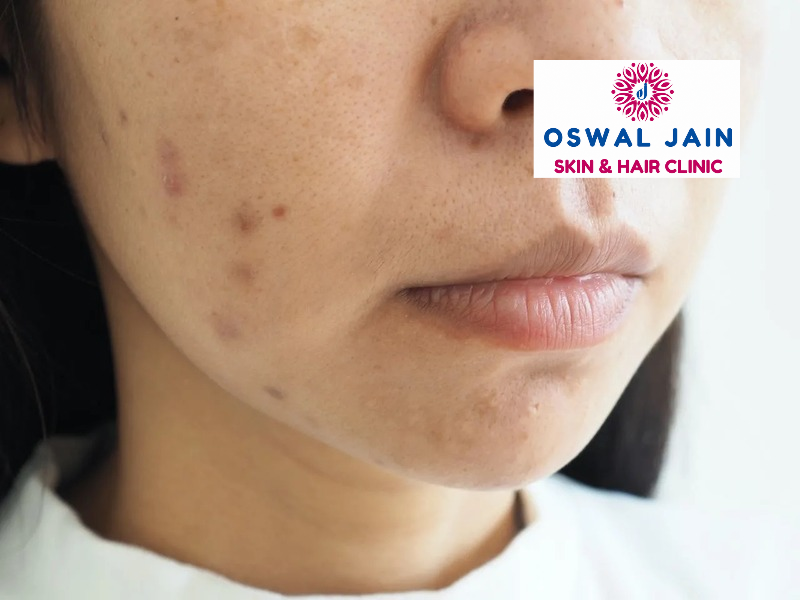
Acne may disappear, but the dark spots it leaves behind can remain for weeks or months. These flat brown, grey, or sometimes reddish marks are often called post-acne pigmentation or post-inflammatory hyperpigmentation (PIH).
Unlike true acne scars, post-acne pigmentation does not usually change the texture of the skin. It is a change in skin colour that develops after inflammation from acne. PIH is particularly common in people with medium to darker skin tones and can sometimes last much longer than the original acne.
The good news is that post-acne pigmentation can often improve with the right skincare, sun protection, acne control and dermatologist-guided treatment.
What Causes Pigmentation After Acne?
Post-acne pigmentation develops as the skin responds to inflammation.
When an acne lesion becomes inflamed, the skin can produce and deposit more melanin. Once the pimple settles, this excess pigment may remain visible as a dark mark.
Several factors can increase the likelihood of pigmentation:
- Inflamed or severe acne
- Picking or squeezing pimples
- Repeated acne breakouts
- Excessive sun exposure
- Irritating skincare products
- Improper use of strong acne treatments
- Skin procedures that cause excessive inflammation
People with darker skin tones are more prone to developing noticeable pigmentation after inflammatory acne. Importantly, pigmentation can sometimes develop even after relatively mild acne.
Is Post-Acne Pigmentation the Same as Acne Scars?
No.
Post-acne pigmentation is mainly a colour change, while an acne scar usually involves a change in skin texture.
For example, a flat brown mark left after a pimple may be post-inflammatory hyperpigmentation. A depressed or raised area of skin is more likely to represent an acne scar.
This distinction matters because the treatment approach can be different. PIH may gradually fade, while textured acne scars may require procedures such as resurfacing, microneedling or other dermatologist-selected treatments.
How Long Does Post-Acne Pigmentation Take to Fade?
The fading time varies from person to person.
Some mild marks gradually become lighter without intensive treatment, while deeper or more persistent pigmentation may remain for months or longer. Sun exposure and continuing acne inflammation can make pigmentation more noticeable or prolong the problem.
Because of this, treating the active acne and the pigmentation together is important. Dermatologists recommend controlling acne early because preventing new inflammatory lesions can help reduce the development of additional dark spots.
How Can You Prevent Post-Acne Pigmentation?
Prevention starts with controlling acne and avoiding unnecessary inflammation.
1. Do Not Pick or Squeeze Pimples
Trying to remove pimples manually can increase inflammation and skin injury. This can increase the risk of persistent dark marks and sometimes scarring.
Allow acne lesions to heal with appropriate treatment instead of repeatedly touching them.
2. Treat Acne Early
If acne keeps returning, treating only the pigmentation may not solve the problem.
New pimples can continue creating new dark marks while older ones are fading. Managing the underlying acne is therefore an important part of preventing post-acne pigmentation.
3. Use Sunscreen Every Day
Sun exposure can make pigmentation more noticeable and can interfere with the process of fading dark marks.
A broad-spectrum sunscreen should be part of a daily skincare routine. Evidence reviews have found photoprotection to be an important part of managing PIH, including in people with skin of colour.
4. Avoid Over-Exfoliating
Using several acids, scrubs or strong active ingredients at the same time does not necessarily make pigmentation disappear faster.
Excessive irritation can trigger more inflammation, potentially making pigmentation worse. A simple, consistent skincare routine is generally easier for acne-prone skin to tolerate.
What Are the Best Treatment Options for Post-Acne Pigmentation?
There is no single treatment that is ideal for every pigmentation case. A dermatologist may choose one or a combination of treatments depending on the type, depth and severity of pigmentation, your skin type and whether active acne is still present.
Topical Treatments
Certain topical ingredients may help reduce pigmentation and manage acne at the same time.
Depending on the individual case, a dermatologist may consider ingredients such as:
- Retinoids
- Azelaic acid
- Niacinamide
- Hydroxy acids
- Other pigment-modulating ingredients
Retinoids have evidence for both acne management and improvement of acne-related pigmentation, while other topical agents may be selected based on skin sensitivity and the type of pigmentation.
Prescription treatments should not be started randomly because irritation from an unsuitable product can potentially worsen pigmentation.
Chemical Peels
Chemical peels may be considered when pigmentation does not improve adequately with skincare alone.
The type and strength of peel should be selected according to the patient’s skin type and condition. In people prone to pigmentation, inappropriate peeling can itself cause inflammation and pigment changes, so professional assessment is important.
Clinical recommendations consider chemical peels as an adjunct or second-line option in selected cases of acne-associated pigmentation.
Laser and Other Energy-Based Treatments
Certain laser or energy-based procedures may be considered for persistent pigmentation.
However, these treatments require careful selection, particularly for Indian and other darker skin types. A procedure that is too aggressive may cause additional inflammation or pigmentation.
Research on PIH treatment shows that laser and energy-based treatments can produce improvement in selected patients, but outcomes vary and pigmentation can occasionally worsen after treatment.
For this reason, laser treatment should be based on an individual dermatological assessment rather than choosing a procedure simply because it is marketed as a fast pigmentation solution.
Can Home Remedies Remove Post-Acne Pigmentation?
Home remedies are not always reliable for treating persistent pigmentation.
Ingredients such as lemon juice, baking soda or harsh scrubs can irritate the skin and may make pigmentation more noticeable. Instead of repeatedly experimenting with DIY treatments, focus on gentle cleansing, moisturising, daily sun protection and an evidence-based treatment plan.
If pigmentation is persistent, widespread or repeatedly returning, a dermatologist can determine whether it is actually post-acne pigmentation and recommend an appropriate approach.
When Should You See a Dermatologist for Acne Pigmentation?
Consider professional evaluation if:
- Dark spots are not fading over time
- New pigmentation keeps appearing because of recurrent acne
- You have both acne and pigmentation
- Pigmentation becomes darker after using skincare products
- You have acne scars along with dark marks
- You are considering chemical peels or laser treatment
- Over-the-counter products have not helped
A dermatologist can assess whether the marks are PIH, acne scars, melasma or another pigmentation condition and then select treatment accordingly.
Frequently Asked Questions
1. What is post-acne pigmentation?
Post-acne pigmentation is a flat area of darker or altered skin colour that develops after acne inflammation. It is commonly called post-inflammatory hyperpigmentation or PIH and is different from a textured acne scar.
2. How can I prevent dark spots after acne?
Treat acne early, avoid picking or squeezing pimples, use gentle skincare and apply broad-spectrum sunscreen regularly. Controlling active acne is important because new inflammatory lesions can create additional pigmentation.
3. What is the best treatment for post-acne pigmentation?
The best treatment depends on the pigmentation, skin type and whether active acne is present. A dermatologist may recommend topical treatments, sunscreen, chemical peels or selected procedures such as laser treatment based on individual needs.
4. Does sunscreen help fade acne dark spots?
Sunscreen helps protect pigmentation from becoming more pronounced due to UV and visible-light exposure. Photoprotection is an important part of a treatment plan for post-inflammatory hyperpigmentation.
5. Can post-acne pigmentation go away permanently?
Many post-acne dark spots gradually fade, but the time required varies. New acne, sun exposure and skin irritation can contribute to persistent pigmentation. Consistent acne control, sun protection and appropriate treatment can help improve the appearance of these marks.
Final Takeaway
Post-acne pigmentation can be frustrating, especially when the acne has already cleared but the marks remain. The key is not to aggressively attack the pigmentation with multiple products. Instead, control active acne, protect the skin from sunlight, avoid unnecessary irritation and choose treatment according to your skin type and pigmentation pattern.
If your acne marks are persistent or you are considering professional pigmentation treatment, consult a dermatologist for an individualized assessment rather than relying on trial-and-error skincare.
For personalized evaluation and treatment of acne, pigmentation and acne-related skin concerns, you can consult Dr. Varun Jain at Oswal Jain Skin & Hair Clinic, Rohini, Delhi.